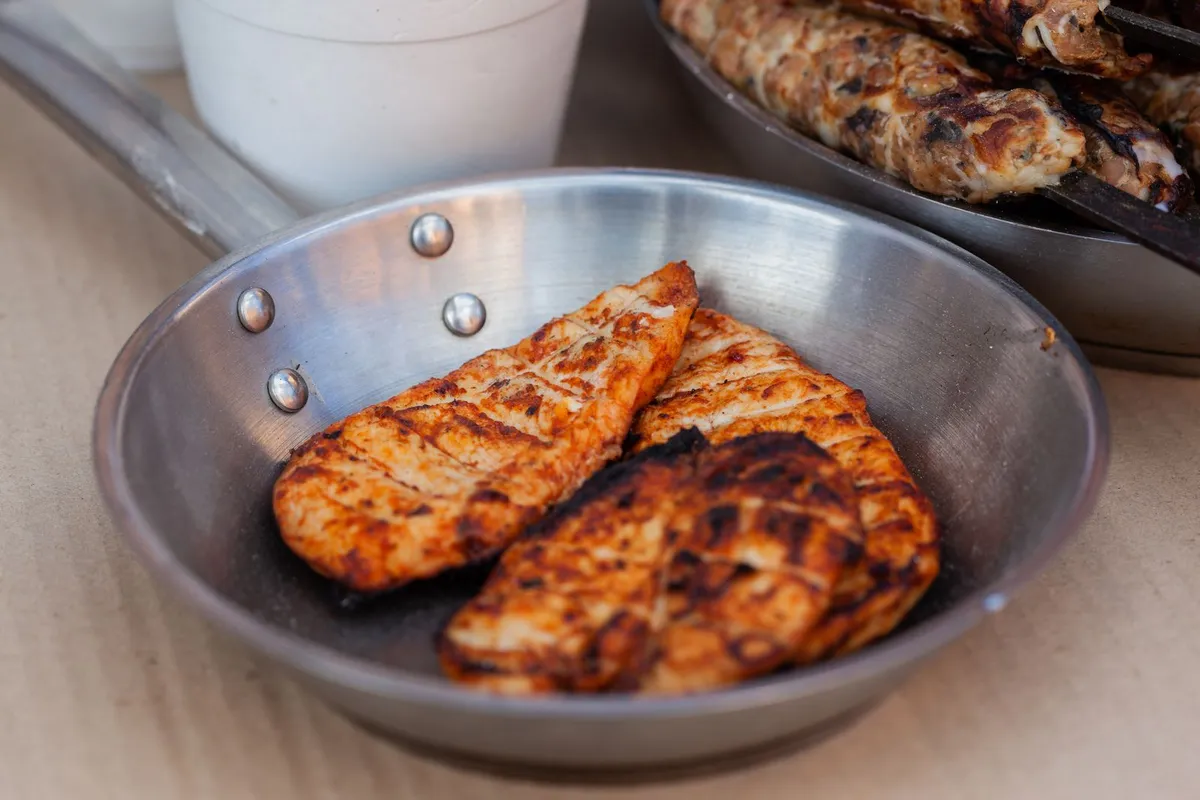
The two questions that make a snack "healthy" for weight loss
Forget the packaging claims. Ask: (1) Does it contain protein or volume? Those are the two things that genuinely switch hunger off. (2) Does it have an end? A yogurt pot ends. A sharing bag of crisps ends when the bag does. Most snack failures are question-two failures.
15 snacks under 200 calories, ranked by fullness
The heavy hitters (protein-first)
- Greek yogurt (170 g pot), ~100 kcal, 17 g protein. The best snack in the supermarket.
- Cottage cheese + cherry tomatoes, ~120 kcal, 14 g protein.
- Two boiled eggs, ~140 kcal, 12 g protein. Prep Sunday, snack Wednesday.
- Edamame (1 cup, podded), ~120 kcal, 11 g protein, takes ages to eat. That's a feature.
- Beef or turkey jerky (30 g), ~80-110 kcal, 10+ g protein.
The volume plays
- Air-popped popcorn (3 cups), ~95 kcal. A whole bowl. Cinema feeling, side-salad calories.
- An apple + 10 almonds, ~170 kcal. Crunch, sweetness, fat, fiber, the full experience.
- Carrot sticks + 2 tbsp hummus, ~130 kcal.
- A big orange, ~85 kcal, and peeling it slows you down. Also a feature.
- Miso soup or a mug of broth, ~35-60 kcal of pure warm "I ate something."
The sweet-tooth negotiations
- Greek yogurt + frozen berries + honey drizzle, ~150 kcal, tastes like dessert.
- Two squares of dark chocolate (85%), ~110 kcal. An amount with an end.
- A banana with 2 tsp peanut butter, ~160 kcal.
- Frozen grapes (1 cup), ~100 kcal, and they take ten minutes to get through.
- Skyr pudding cups, most are 90-140 kcal with 9+ g protein. Read the label once, trust it after.
Thirst check first: mild dehydration reads as snackiness. A glass of water, wait ten minutes, the "hunger" folds about a third of the time. (More in the hydration guide.)
Snacks you buy rather than make
Most people asking about snacks are not looking for a recipe. They are standing in a shop asking which packet to pick, and the front of a packet is marketing while the back is information. Three habits do most of the work:
- Read the per pack column, not the per 100 g column. A bag that says 121 kcal per 100 g and weighs 175 g is a 212 kcal snack. The per 100 g figure is there because it is the legal requirement, not because it is the number you are about to eat.
- Check protein before calories. Two packets at 150 kcal are not equal if one carries 15 g of protein and the other carries 2. The first ends the hunger, the second postpones it by about twenty minutes.
- Ignore the claim on the front. Low fat usually means sugar was added to rescue the taste, and a bar marketed on protein is often a confectionery bar with whey in it.
The packets that survive that test are dull and they work: plain Greek yogurt pots, a tin of tuna, unsweetened skyr, beef jerky, edamame, plain popcorn, cottage cheese tubs, roasted chickpeas, and a boiled egg pack if your shop sells them.
The 100 calorie snack pack is the one to argue with. It solves portion size by making the portion small, which is not the same as making it filling. A 100 kcal pack of crisps carries about 1 g of protein, and the reason people eat two is not weak will, it is that one did nothing. A 100 kcal pot of fat free Greek yogurt carries about 17 g and reliably ends the conversation.
Snacks for work, and snacks for a bag
The constraint at work is rarely calories, it is that the snack has to survive a morning in a drawer and be eaten at a desk without a plate. That rules out most of the volume plays above and puts the emphasis on shelf stability.
- Desk drawer, no fridge: tinned tuna or mackerel, jerky, roasted chickpeas, a small bag of almonds measured out rather than eaten from the bag, plain popcorn, an apple.
- Fridge at work: Greek yogurt, cottage cheese, boiled eggs, babybel style cheese portions, hummus with carrot sticks.
- In a bag all day: jerky, a protein bar you have actually read the label of, an orange, a banana, a pouch of tuna with a pull ring so you are not hunting for a tin opener.
The practical failure is not the choice, it is not having one. A drawer with three tins in it beats a perfect plan that lives in your head, because the vending machine is fifteen steps away and your plan is not.
Warm snacks, which almost nobody writes about
Cold snacks dominate every list of this kind and they are a poor fit for half the year. Warm options that stay under 200 kcal:
- Miso soup, about 35 kcal a bowl, and it takes a kettle
- A mug of consomme or a stock cube broth, about 10 to 20 kcal, which is close to free and genuinely takes the edge off
- Plain microwaved popcorn, about 95 kcal for 25 g
- Half a tin of soup, a lentil or vegetable one, about 90 to 130 kcal with real fibre
- Scrambled egg whites on one slice of toast, about 170 kcal with 14 g of protein
- Roasted chickpeas straight from the oven, about 120 kcal for 40 g
Warmth does something the calorie count does not capture. A hot drink or a broth slows the eating down, and a snack eaten in four minutes rather than forty seconds is a snack you register having had.
Low fat and low calorie are not the same shelf
Plenty of people ask for low fat rather than low calorie, and the two lists overlap without matching. Fat carries 9 kcal per gram against 4 for protein and carbohydrate, so cutting fat is one lever on calories. It is not the only one, and a low fat snack built on sugar and refined starch can easily out calorie a handful of nuts.
If fat is your axis, the honest list is short: fat free Greek yogurt, non fat cottage cheese, turkey or chicken slices, tinned tuna in water, egg whites, fruit, plain popcorn, rice cakes with something lean on top. If calories are your axis, nuts and cheese come back on the list in measured amounts, because they are filling enough to be worth their cost.
Snacking in a deficit, and when a snack is the wrong tool
People ask for calorie deficit snacks and cutting snacks as though the answer differs from ordinary snacking. Mostly it does not. What changes is the budget, and therefore the standard a snack has to meet before it earns a place.
A useful test with three parts. A snack is worth it in a deficit if it carries at least 10 g of protein, costs under about 200 kcal, and stops you eating again within the hour. Two out of three is usually fine. None out of three is a habit rather than a snack, and the honest move there is not to find a better snack but to look at whether the meal before it was big enough.
The specific advice worth disagreeing with is the six small meals a day rule. It is repeated everywhere on the grounds that frequent eating raises metabolism. The thermic effect of food is a percentage of what you eat, so splitting the same intake into six meals rather than three gives you the same total, not more. Eating more often is a reasonable personal preference and a poor metabolic strategy, and being told it burns extra calories has sent a lot of people into snacking they did not need.
The lowest calorie snacks, answered plainly
If the question is genuinely which snacks cost the least, rather than which are most useful, the order is roughly: a mug of broth at 10 to 20 kcal, celery or cucumber with a vinegar dip at about 15 kcal a portion, a bowl of miso soup at about 35 kcal, cherry tomatoes at about 30 kcal, a sugar free jelly pot at about 8 kcal, and plain black coffee or tea at close to zero.
Worth saying plainly: most of those do very little for hunger. They are useful for breaking a habit loop, the four o'clock reach for something, rather than for filling a real gap. If you are actually hungry, spend 150 kcal on protein instead of 20 kcal on celery and save yourself the second search an hour later.
The snack psychology nobody tells you
Snacks fail in the dark. Eaten from the bag, standing at the counter, unlogged, a day of "little bits" can quietly total 600 kcal that never appears in your food diary, which is exactly how "I barely eat and still gain" happens. The fix isn't discipline; it's a five-second photo log that makes the snack visible. Logged snacks self-moderate. Secret ones don't.
Where Calfit fits
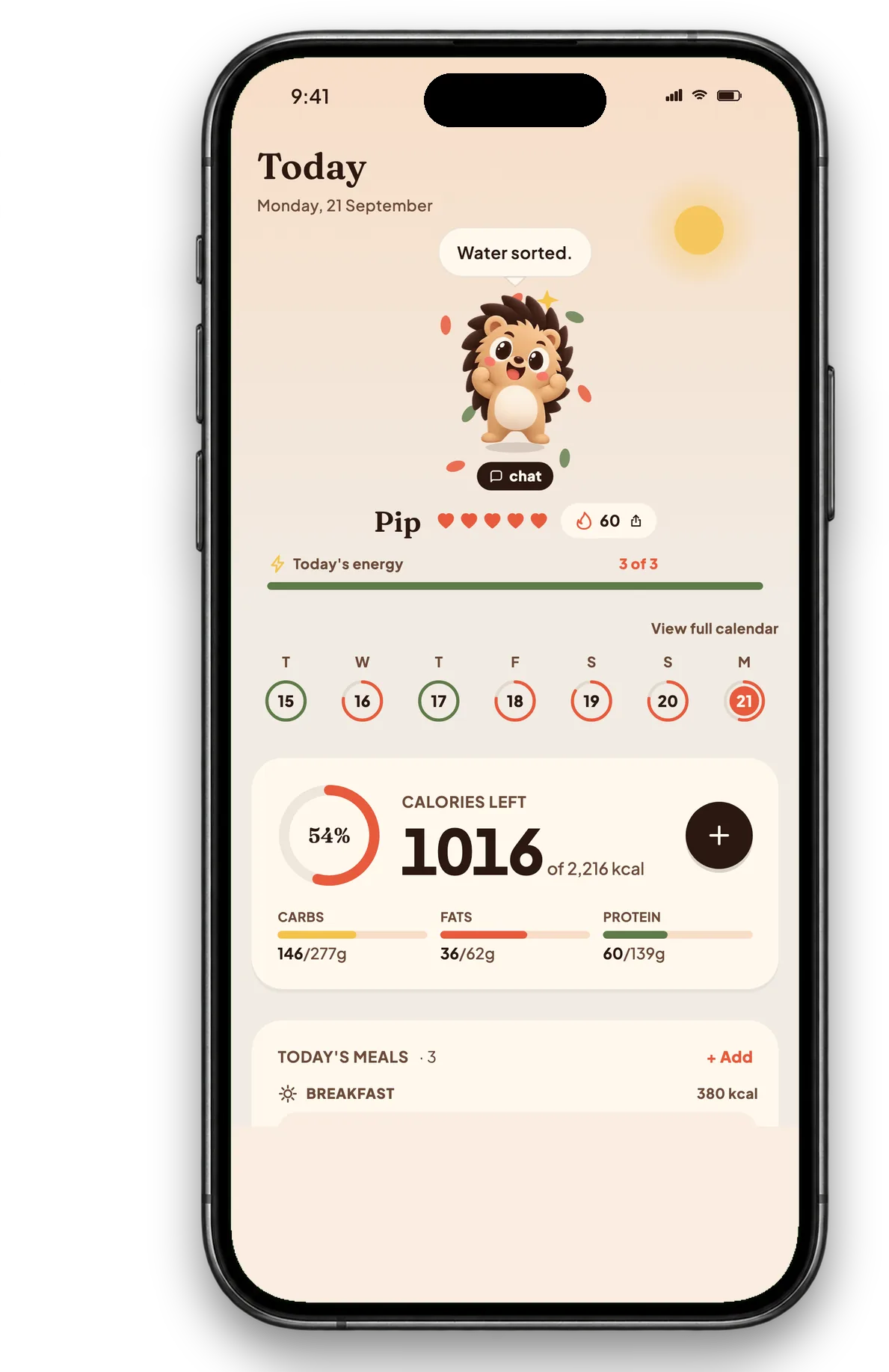
Calfit treats snacks as first-class citizens: snap the yogurt, the app logs ~100 kcal and 17 g protein against your day, and your calories-left number updates before the spoon's in. If the afternoon ring says you're short on protein, the app's suggestions nudge you toward the eggs instead of the biscuit tin, and Pip logs the streak either way, because a logged biscuit beats a secret salad. If a fasting window would remove the temptation altogether, the intermittent fasting calculator sets one from your schedule.
Sources
- FoodData Central, US Department of Agriculture, 2019
- Food labels, NHS, 2026
- Food energy: methods of analysis and conversion factors, Food and Agriculture Organization, 2003
- The role of protein in weight loss and maintenance, American Journal of Clinical Nutrition, 2015
- Increased meal frequency does not promote greater weight loss on an equal energy restricted diet, British Journal of Nutrition, 2010
- Diet induced thermogenesis, Nutrition and Metabolism, 2004
How this was made
Written by Abdullah Javaid, founder of Calfit, drafted with AI assistance and edited by hand. Calorie and protein figures are rounded reference values from USDA FoodData Central and standard UK and US supermarket labels, read on 2026-09-23, and energy per gram uses the standard 4 kcal for protein and carbohydrate and 9 for fat. The screens are captures from the current Calfit app.