Home / Macro calculator
Macro calculator
Work out how many calories you need, and how to split them between protein, carbs and fat. Change anything and the numbers follow. Nothing is sent anywhere, the whole thing runs in your browser.

On this page ⌄
How this calculator works
Three steps, in this order, because each one depends on the last.
Need the calories first? The calorie calculator shows your BMR, your maintenance and the target this page then splits.
1. Your maintenance calories
First it estimates the energy your body burns at complete rest, using the Mifflin St Jeor equation, which is the most accurate of the common formulas for people who are not extremely lean or extremely heavy. Then it multiplies that by an activity factor between 1.2 and 1.9 to cover everything you do on top of lying still. The result is your maintenance: eat that and, roughly speaking, your weight holds.
2. The adjustment for your goal
Losing fat sets your target about 20% below maintenance, which for most people lands between 300 and 600 calories a day. That is aggressive enough to show on the scale within a few weeks and gentle enough that you can still train, sleep and think. Building sets it about 10% above, because a bigger surplus mostly buys you fat. Maintaining leaves it alone.
3. The split
Protein comes first and is set from your body weight, not from a percentage, because your muscle does not know how many calories you are eating. Fat takes a share of the total, never dropping so low that it causes problems. Carbs get whatever is left, which is why the carb number moves most when you change anything else. If you want to read the reasoning in full, the macro tracking guide covers it.
What to actually do with these numbers
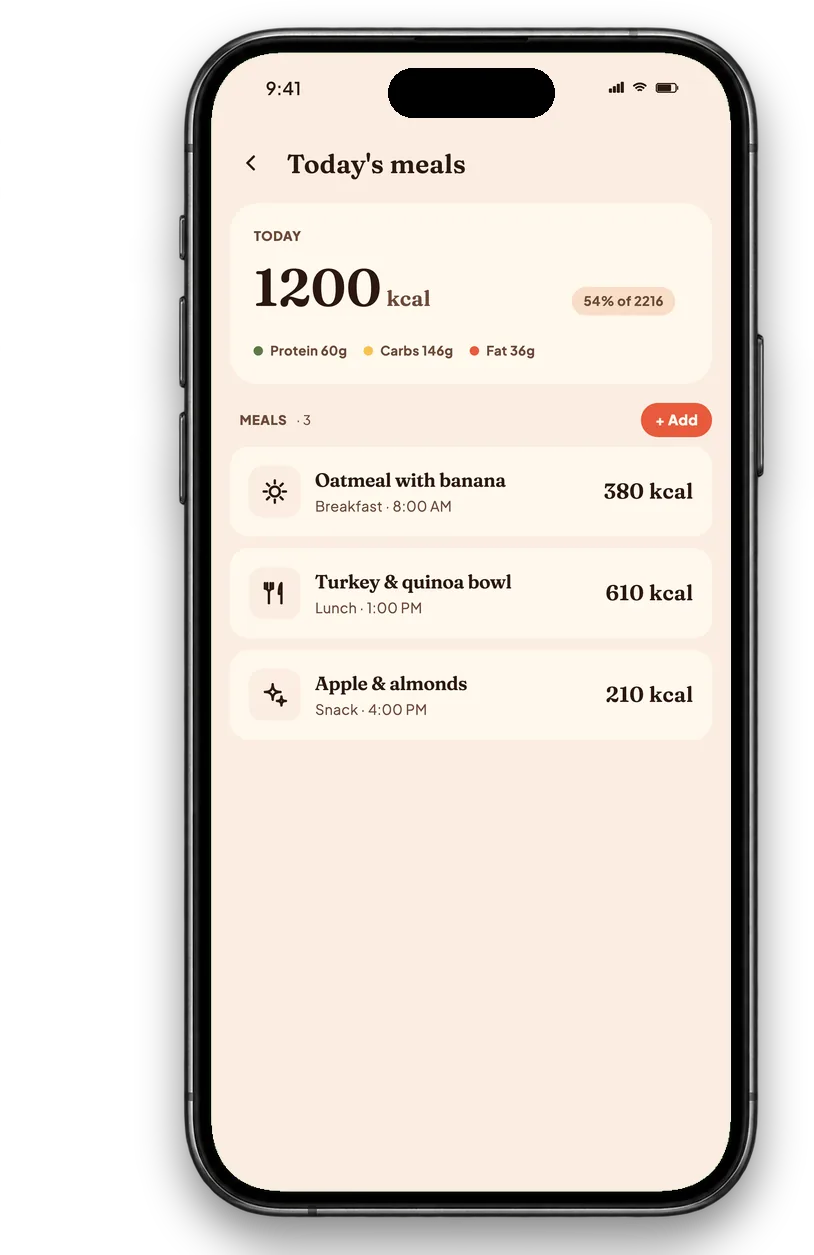
A target you never check is a wish. The gap between people who hit their macros and people who do not is almost never knowledge, it is whether logging costs two minutes or ten. So:
- Chase protein, approximate the rest. Protein holds onto muscle in a deficit and is the most filling of the three. Carbs and fat can wander by 20 g without changing your week.
- Judge it on the weekly average. Daily weight swings a kilo or more on water alone, which is a whole separate thing worth understanding. Three or four weeks of averages tell you whether the target is right.
- Recalculate as you change. Maintenance falls as you get lighter. Come back every four to six kilos.
- Log the days you would rather not. Those are the days carrying the information.
Turning these grams into actual meals is easier in batches: meal prep for weight loss shows how.
Sources
- A new predictive equation for resting energy expenditure in healthy individuals (Mifflin St Jeor), American Journal of Clinical Nutrition, 1990
- Comparison of predictive equations for resting metabolic rate in healthy nonobese and obese adults, Journal of the American Dietetic Association, 2005
- Human energy requirements: report of a joint FAO, WHO and UNU expert consultation, Food and Agriculture Organization, 2004
- International Society of Sports Nutrition position stand: protein and exercise, Journal of the International Society of Sports Nutrition, 2017
- Food energy: methods of analysis and conversion factors, Food and Agriculture Organization, 2003
How this was made
Written by Abdullah Javaid, founder of Calfit, drafted with AI assistance and edited by hand. Maintenance is the Mifflin St Jeor equation multiplied by an activity factor between 1.2 and 1.9, and the target is 20% under for fat loss or 10% over for building. Protein is set from body weight, fat takes 25% of calories on a cut, and carbs take the rest, at 4, 4 and 9 kcal per gram.
Quick questions
How do I calculate my macros?
What macros should I eat to lose weight?
Is this macro calculator accurate?
Do I have to hit my macros exactly?
How often should I recalculate my macros?
Keep reading
Related guides

Macro tracking for beginners
Protein, carbs and fat explained, and the only macro most people need to watch.
Read the guide →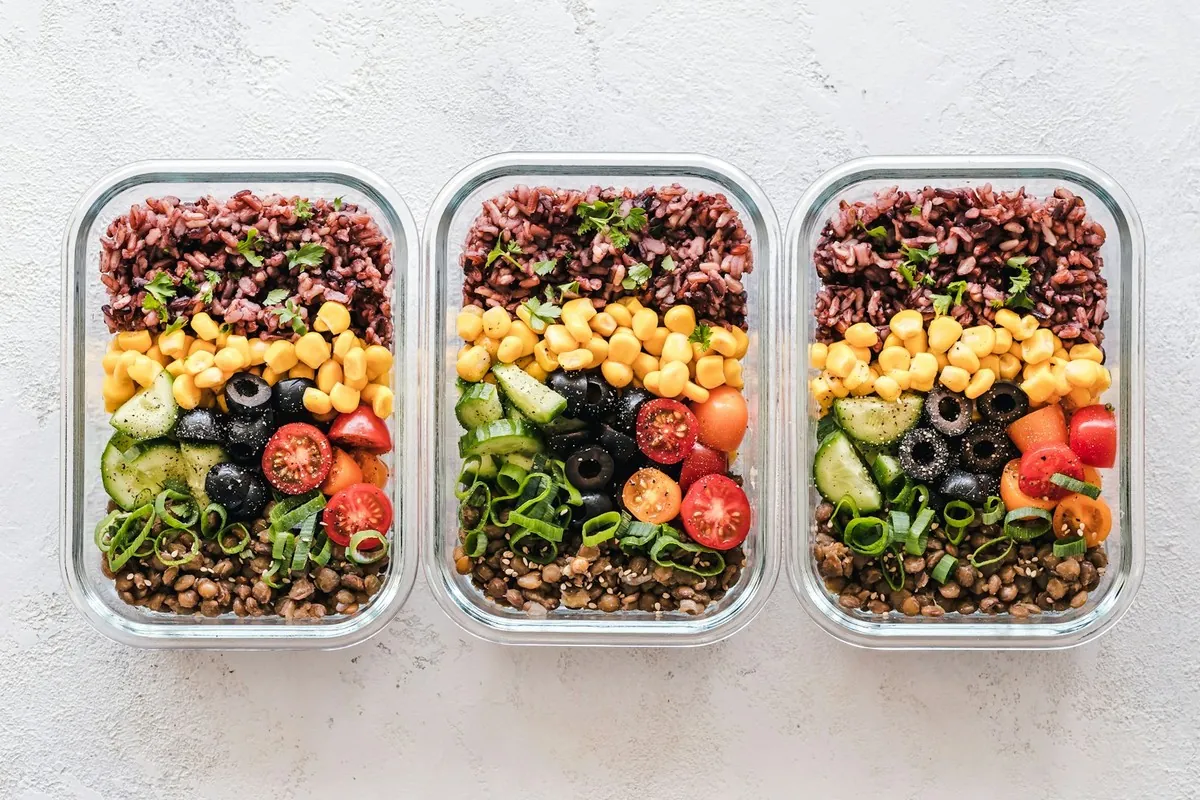
How many calories to lose weight
Where your number comes from, and when it needs changing.
Read the guide →
What is a calorie deficit?
The one mechanism behind all weight loss, and how to stay in it without misery.
Read the guide →