
The definition
A calorie deficit means eating fewer calories than your body burns. When that happens, your body makes up the difference from stored energy, mostly body fat. That's it. That's weight loss. Every diet with a success story, from intermittent fasting to low-carb to “just eating clean,” produces results exactly to the degree that it puts you in a deficit and keeps you there.
How big is yours? The calorie calculator works out maintenance and sets the deficit against it.
Need the size of your own deficit? The macro calculator works out your maintenance and sets a 20% cut against it.
This is genuinely good news: it means you don't have to find the one magic diet. You have to find your comfortable way of eating a bit less than you burn, and the options are wide open.
How big should the deficit be?
Bigger is not better. A kilogram of body fat stores roughly 7,700 kcal, so:
- 300 kcal/day deficit ≈ 0.3 kg (⅔ lb) per week, gentle, nearly invisible in daily life
- 500 kcal/day deficit ≈ 0.5 kg (1 lb) per week, the classic sustainable pace
- 1,000+ kcal/day deficit, fast on paper, but hunger, fatigue and rebound eating usually collect the debt with interest
The deficit you can hold for six months beats the one you can only hold for six days. If you're constantly hungry, sleeping badly, or thinking about food all day, the deficit is too deep, and the fix is to eat a little more, not to try harder.
Reality check: you don't need to be in a deficit every single day. What matters is the weekly average. One big dinner doesn't undo a good week, quitting over one big dinner does.
Staying in a deficit without misery
Prioritize protein
Protein is the most filling macro and protects muscle while you lose. Meals built around it keep the deficit comfortable instead of white-knuckled. (More in the macro guide.)
Eat food with volume
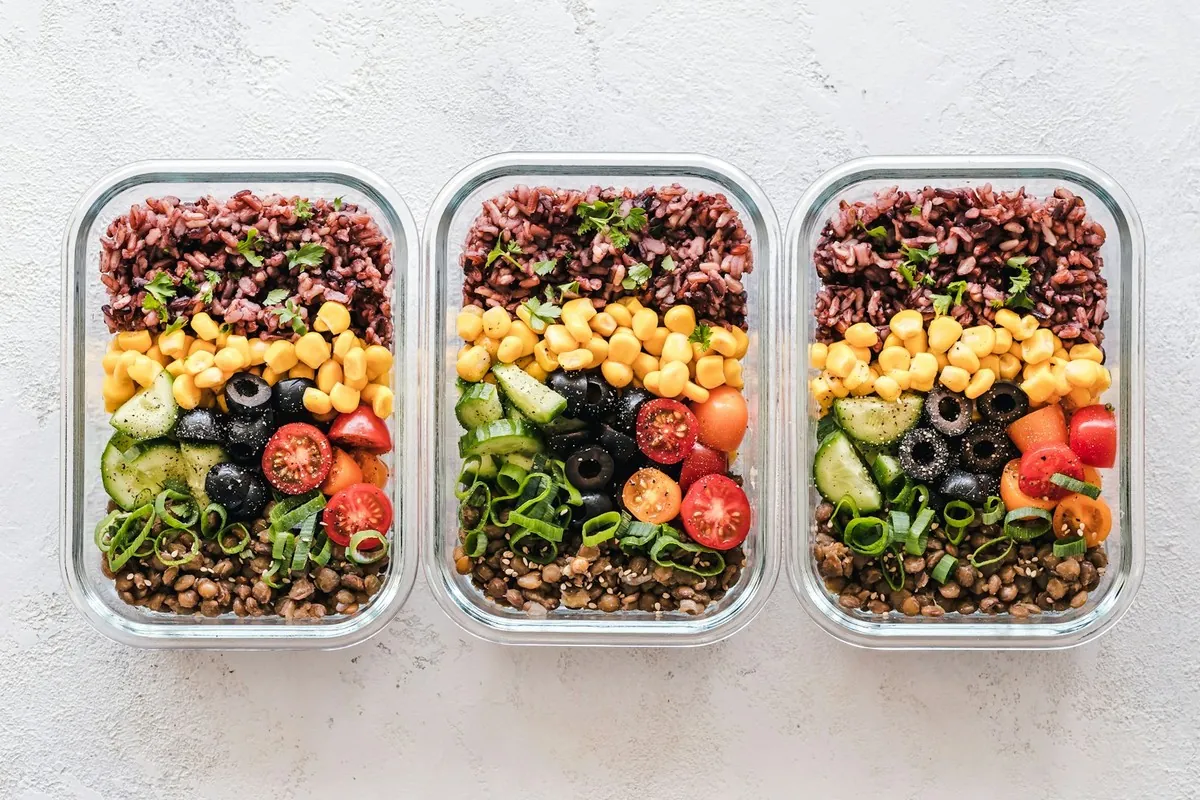
Vegetables, fruit, soups, potatoes: food that takes up space tells your body it ate. 400 kcal of stir-fry quiets hunger in a way 400 kcal of biscuits never will.
Watch the drinkable calories
Lattes, juices, soft drinks and “a splash of” things can quietly erase a 500-calorie deficit without ever making you feel fed.
Actually track
Not forever, but while you're learning, measurement is the difference between a real deficit and a hopeful one. Studies on self-monitoring are blunt about this: people who track lose more, and the effect scales with consistency, not precision.
How Calfit keeps you in one
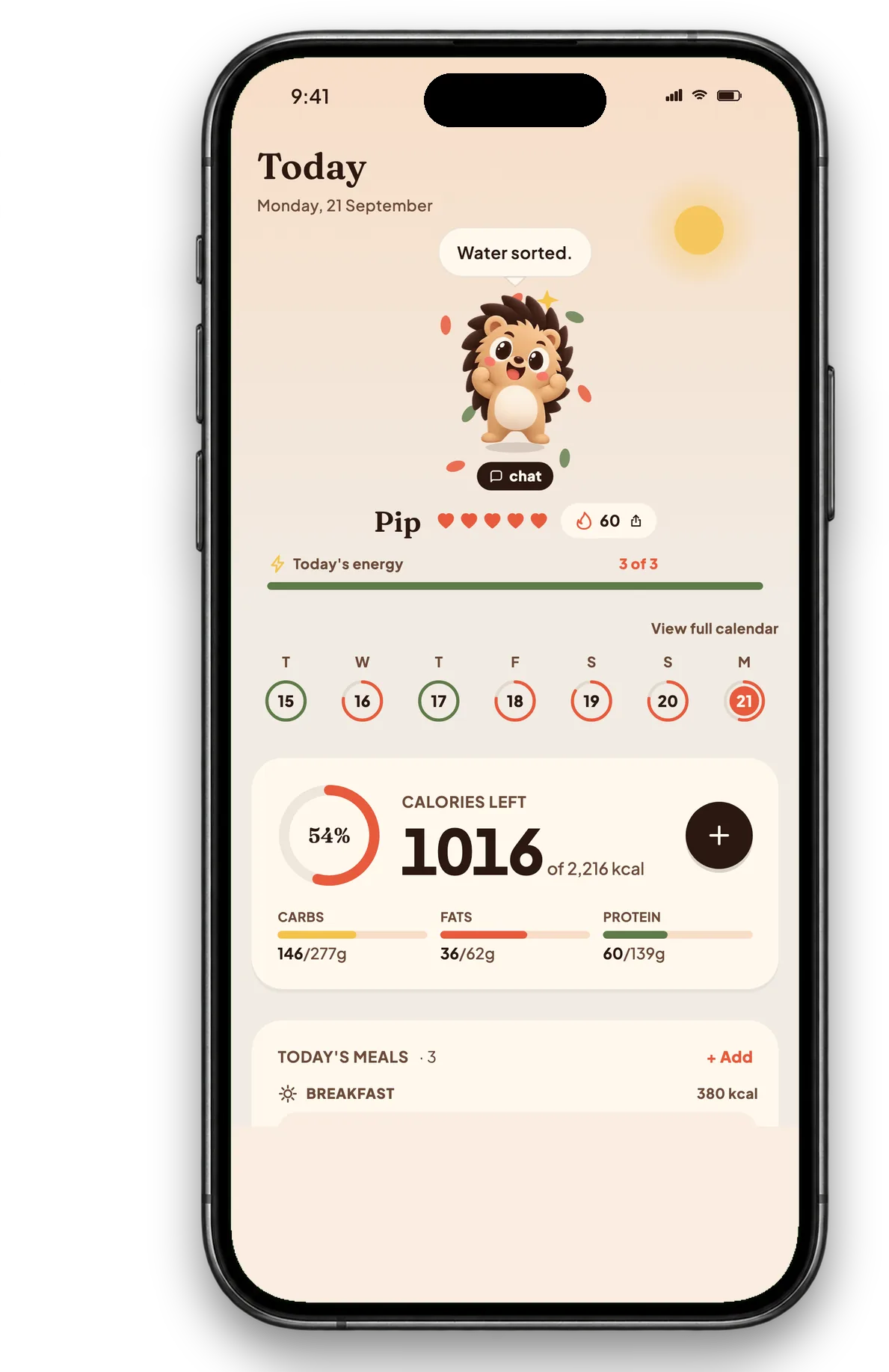
Calfit works out your personal target, then makes staying under it nearly effortless: photograph your meal, get calories and macros in about five seconds, and watch the calories-left number update in real time. The weight chart tracks your trend rather than daily noise, the target self-corrects as you lose, and Pip the hedgehog handles the part no calculator ever solved, making you want to come back tomorrow. The weight loss percentage calculator shows the same deficit as a share of your starting weight rather than a raw number.
When the deficit is real and nothing moves, why you are not losing weight in a calorie deficit goes through the usual causes.
Sources
- Quantification of the effect of energy imbalance on bodyweight, The Lancet, 2011
- Body Weight Planner, National Institute of Diabetes and Digestive and Kidney Diseases, 2019
- How to lose weight, NHS Better Health, 2020
- The role of protein in weight loss and maintenance, American Journal of Clinical Nutrition, 2015
- Self monitoring in weight loss: a systematic review of the literature, Journal of the American Dietetic Association, 2011
How this was made
Written by Abdullah Javaid, founder of Calfit, drafted with AI assistance and edited by hand. The weekly rates use about 7,700 kcal per kilogram of body fat, a planning approximation that real weight loss drifts from over time as maintenance falls. The screens are captures from the current Calfit app.