Home / Protein calculator
Protein calculator
How much protein you should eat a day, from your body weight, how much you train and what you are trying to do. Nothing is sent anywhere, the whole thing runs in your browser.

On this page ⌄
How much protein you actually need
The number depends on one thing far more than the rest: whether you are asking your body to keep muscle while you are eating less than it burns.
Want the calorie side too? The calorie calculator gives you BMR, maintenance and a daily target.
| Situation | Per kilo | Per pound |
|---|---|---|
| Sedentary, not training, maintaining | 0.8 to 1.2 g | 0.4 to 0.5 g |
| Training, maintaining weight | 1.4 to 1.8 g | 0.6 to 0.8 g |
| Training, in a calorie deficit | 1.8 to 2.2 g | 0.8 to 1.0 g |
| Building muscle in a surplus | 1.6 to 2.0 g | 0.7 to 0.9 g |
Why the deficit number is the highest
When you eat less than you burn, your body takes the difference from somewhere, and it does not care whether that is fat or muscle. Protein and resistance training are the two things that tip the decision toward fat. That is the whole reason the number goes up exactly when your calories go down, which feels backwards and is not.
The second reason, which people underrate
Protein is the most filling of the three macros by a wide margin. A day built around it is a day where the deficit stops feeling like an act of willpower. Plenty of people who cannot stick to a diet are not short of discipline, they are short of protein. There is more on how it fits with the other two in the macro tracking guide.
What that looks like on a plate
Rough numbers, because rough is enough:
- Chicken breast, 150 g cooked: about 46 g
- Greek yogurt, 200 g pot: about 20 g
- Two large eggs: about 13 g
- Tin of tuna, drained: about 25 g
- Cooked lentils, 200 g: about 18 g
- Firm tofu, 150 g: about 24 g
- Whey scoop, 30 g: about 24 g
Three of those in a day and most people are close. The high-protein, low-calorie list ranks more of them by protein per calorie, which is the ratio that matters when you are cutting.
Sources
- International Society of Sports Nutrition position stand: protein and exercise, Journal of the International Society of Sports Nutrition, 2017
- A systematic review, meta analysis and meta regression of the effect of protein supplementation on resistance training induced gains in muscle mass and strength, British Journal of Sports Medicine, 2018
- A systematic review of dietary protein during caloric restriction in resistance trained lean athletes, International Journal of Sport Nutrition and Exercise Metabolism, 2014
- Dietary Reference Intakes for energy, carbohydrate, fiber, fat, fatty acids, cholesterol, protein, and amino acids, National Academies Press, 2005
- FoodData Central, US Department of Agriculture, 2019
How this was made
Written by Abdullah Javaid, founder of Calfit, drafted with AI assistance and edited by hand. The daily figure is your body weight multiplied by 2.0 g per kilogram to lose fat, 1.6 to maintain or 1.8 to build, with the range shown running from 80 to 110% of that. The food amounts are rounded from USDA FoodData Central.
Quick questions
How much protein do I need a day?
How much protein do I need to lose weight?
Can you eat too much protein?
Do I need to spread protein across the day?
Does the protein in plants count?
Keep reading
Related reading

Macro calculator
The same numbers, plus how the carbs and fat around your protein should fall.
Open the calculator →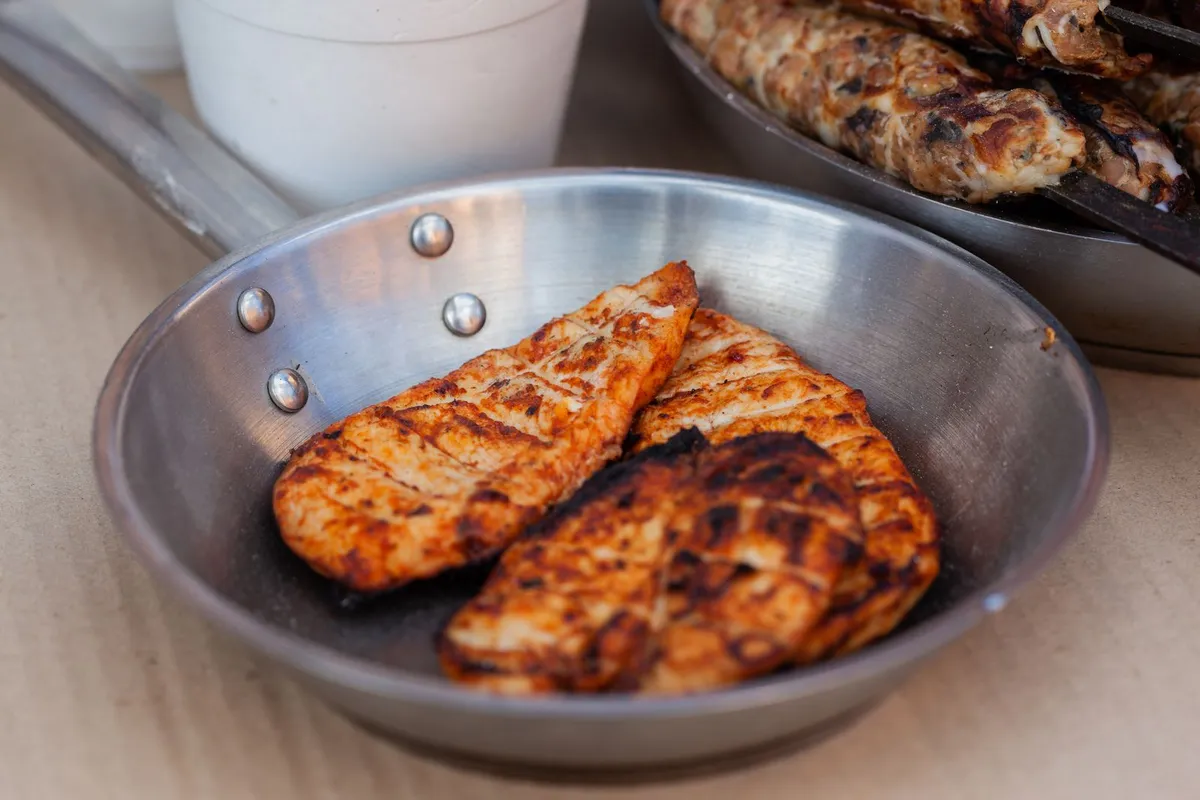
High-protein, low-calorie foods
The foods that fill you up for the fewest calories, ranked by real numbers.
Read →
Macro tracking for beginners
Protein, carbs and fat explained, and the only macro most people need to watch.
Read the guide →